Showing posts with label Waiting for Godot. Show all posts

Monday, March 16, 2009

Waiting for Godot: the final touches

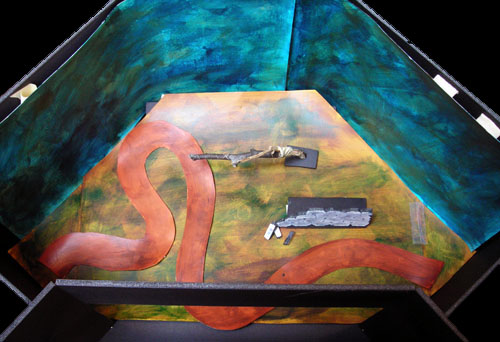
Last night I spend quite a few hours finally putting everything together for my Waiting for Godot model.

First, I painted some foamcore white to get started on making my wall.

While I waited for that to dry, I drew out the final version of my road and began to paint it. Mixing colors was a fun throwback to kindergarten, but I wasn't very good at it. In the end the road was more yellow than I had intended, so I went over it with some brighter orange.

Sara gave me a brilliant idea for the wall- instead of cutting out a million pieces for the wall and gluing them together, why not leave them all connected and only make it look like I'd cut them all out? Genius. It took me 1/10 of the time it would have otherwise.

Then I started working on the ground. This was again tricky, due to my rustiness at paint mixing. I mixed a whole bunch of samples, found several perfect colors, and then couldn't duplicate a single one of them. I probably should have written down what I did, or labeled them, or at least paid more attention. I finally gave up on getting the color exactly right and just started painting. After several layers of all kinds of ugly browns and yellows, I had something that didn't really look like I had envisioned it, but was passable. I took a deep breath and started adding some green- I wanted to give the impression that it was a field and there was grass, even if it was dead or dying. I only had one green and it was a very lively shade. Nothing I mixed it with changed that. So I just went for it- and to my surprise, it worked. I started getting excited- this was all starting to make sense.

The problem now was that of course the bright orange road now looked absolutely ridiculous next to the dark brown and green ground, and the bright white stones stood out horribly. I coated the road in some brown and the stones in some gray, at least hoping to make them look a little dirty.

I painted a sky that was far too blue and had to tone it down with some orange. The whole experience was one long lesson in paint mixing and color wheel exercises.

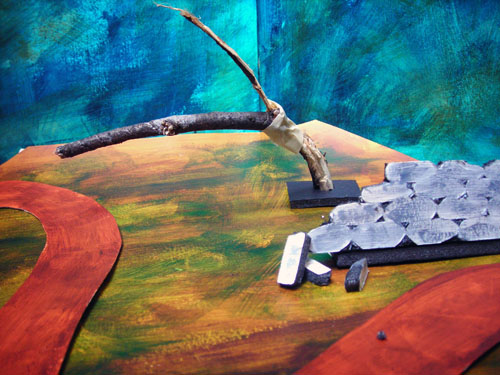
I whittled some twigs down on one side to make it look as if lightning had struck them. I was able to give the impression of a much larger tree having been cut in half by just shaving off a tiny bit of the bark on one side.

Putting it all together was a bit more difficult than I had anticipated, but it finally happened.

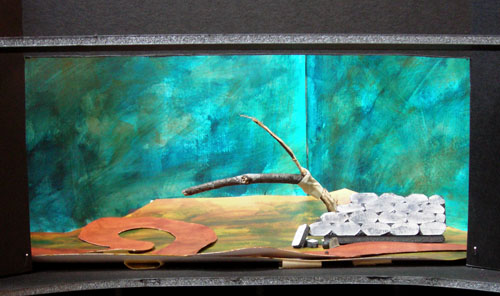
Check out the final product:


Reflections
Overall, I'm not very happy with this model. It's not objectively "bad" or "wrong," obviously, but it's not quite what I had in mind. Part of this is strictly due to the limits of my artistic abilities. For example, the impressionist style paintings came about because I'm not experienced with painting detail. The set I had envisioned was in fact much more realistic.

That said, this was the first time I ever attempted anything like this, so these types of challenges are to be expected. Overall I'm happy with the process I followed and the ideas I generated, which is really the important part. I just need a little practice bringing my ideas into the real world, so I'm looking forward to trying again in the next project.

Thursday, March 12, 2009

Weekly Journal #4: Drafting

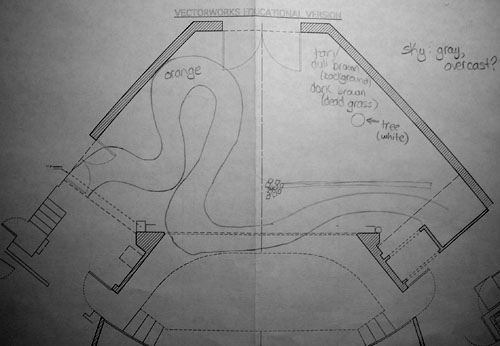
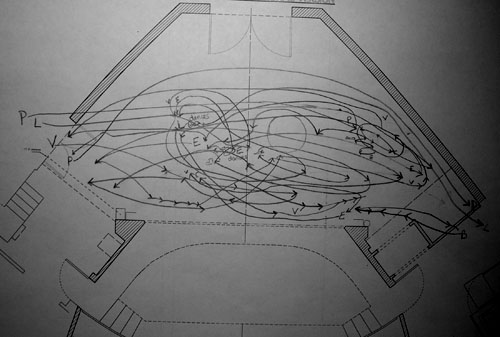
Here's my attempt at a drafting sketch.

I'm not quite sure if I didn't do it right, or well, or if I just don't particularly like this idea or find it very useful. It provides an interesting glance at the type of action that occurs onstage, but while going through the stage directions I found that the type of information I found most important was impossible to record in this form: things like how quickly someone moved, where the characters were in relation to each other at any given point in time, etc.


I guess it does demonstrate the kind of repetitive back and forth action of this play, which is useful to know.

Wednesday, March 11, 2009

Waiting for Godot: in class work

On Tuesday we worked on our models in class a bit. I didn't get much actual work done, but I have finalized most of my ideas for the final project.

I really like the idea of having a winding road, so I sketched a few tries before deciding on one which had just the right amount of twisty-turniness.

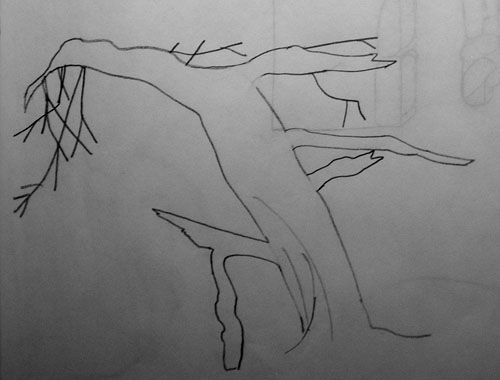
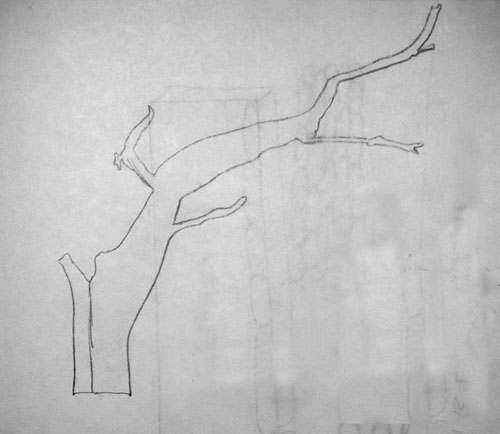
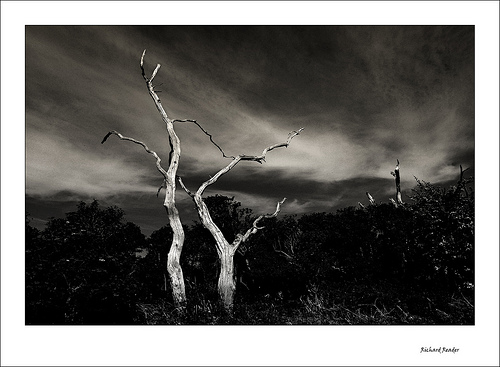
I sketched a few trees based off of some of the images I found last week. These weren't great, and were severely limited by my artistic skills. But I decided that I definitely want the tree to look very dead- even leaning to one side a little as if it's about to fall over. Suddenly the idea of having the tree look as though it had been struck by lightning came to me, and I really liked it. We'll see if I'm able to incorporate that into the model. I'm also leaning towards painting it white, because the contrast of the white trees against a dark backdrop in one of the images I found last week really stuck with me.


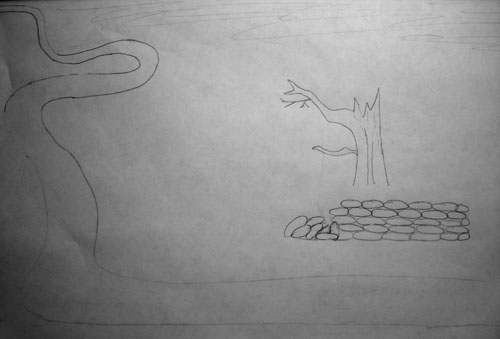
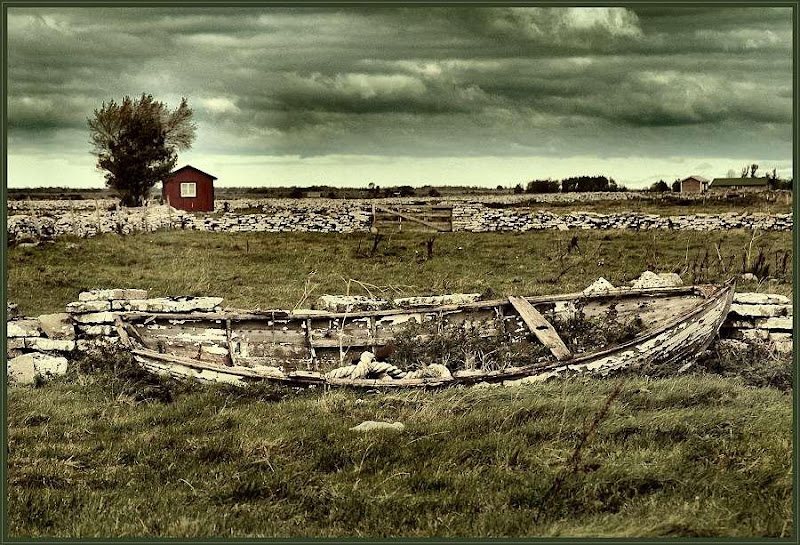
I really liked one image I found which showed an old farm and some stone fences. There were hints of civilization, but the whole thing still seemed kind of deserted. Something about the fences appealed to me, so I've decided to include a stone wall in my model, right in front of the tree. It will hint that maybe there used to be something more interesting at this place, like a house or a farm; however, it has since fallen into disrepair. Some of the stones at one end of the wall have fallen into a pile, creating the "mound" mentioned in the script.


So, putting it all together, I drew a final rough sketch showing how the road, wall and tree all fit together. I want the road to look sandy and orange. The ground will be some sort of dark brown or green, to demonstrate dead grass, or at least grass that has been burned and beaten down by the sun. The sky will be grey with some hopefully interesting clouds.


Throughout this whole process I haven't really given much thought to the moon. I haven't forgotten about it, I just haven't really found anything appealing or interesting about it. For me, the moon is just not a crucial part of the set. Obviously it can be important to others and I'm sure it was important to Beckett, but it doesn't stand out for me personally. So I think I'll just leave the moon very basic and nondescript. It does need to be there, but it won't be anything special or interesting, just a full moon hung simply in the sky.

Thursday, March 5, 2009

Waiting for Godot: images

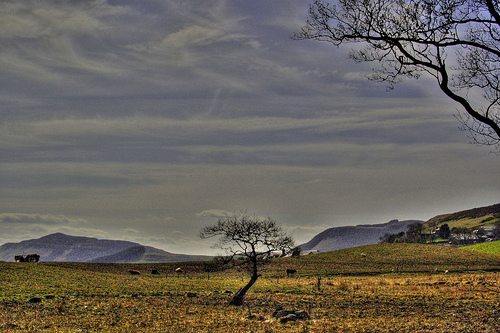
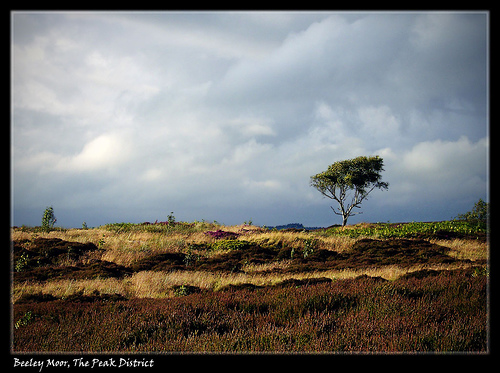
Not knowing where to start in looking for photos that might serve as an inspiration for my Waiting for Godot set model, I just punched some likely search words into Flickr and Google Image Search: lonely tree, isolation, middle of nowhere.

The results were surprisingly useful. I saved a few dozen- anything that struck me as interesting. A few days later I pared it down, and organized the remaining photos based on which aspects of the design I thought they would be useful for.


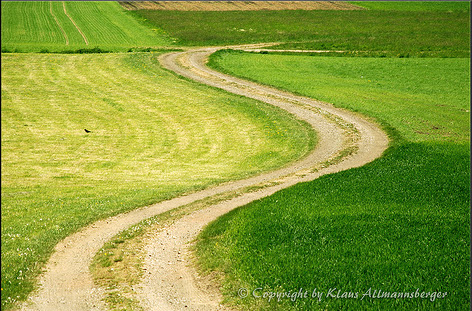
I love the idea of having a winding road. This one, especially, winds around all over the place for absolutely no reason. Why? It ties in very nicely with the "what is the meaning of life/following all these rules?" theme in Godot.


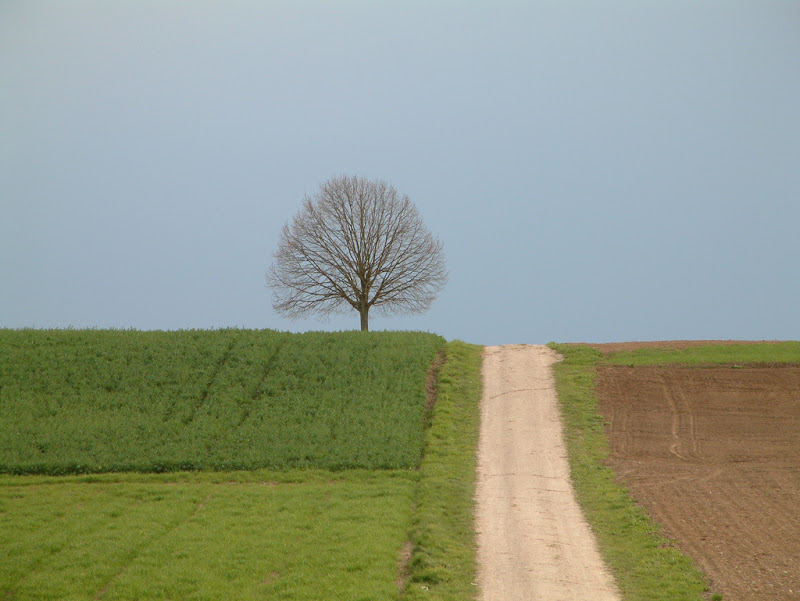
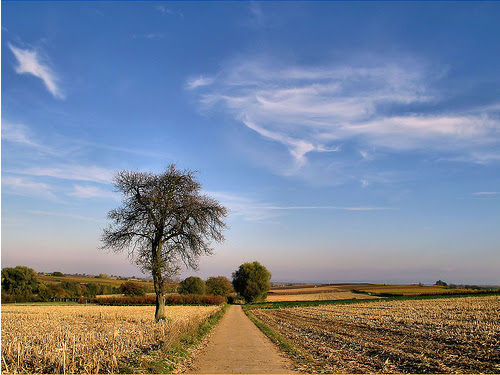
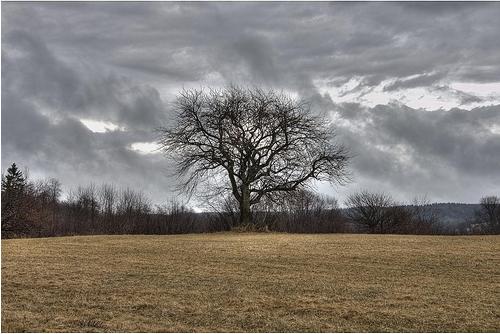
This is sort of the typical image I feel comes to mind when you say, "a country road; a tree." I want my set to NOT look like this.


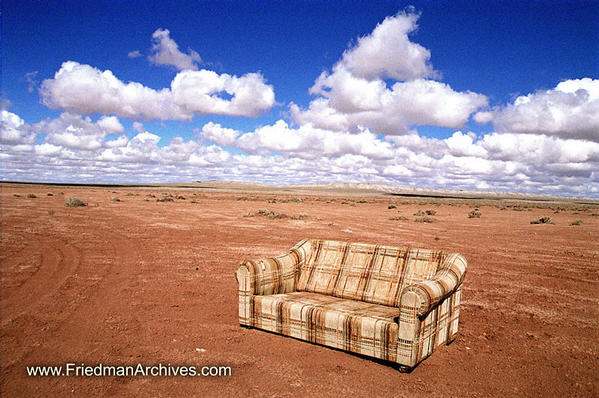
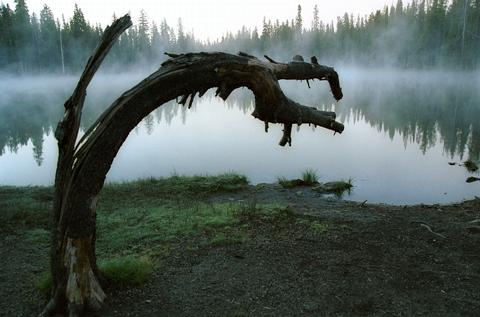
This image is so funny. I like how it implies that someone is making something of a comfortable home for themselves out there in the middle of nowhere.


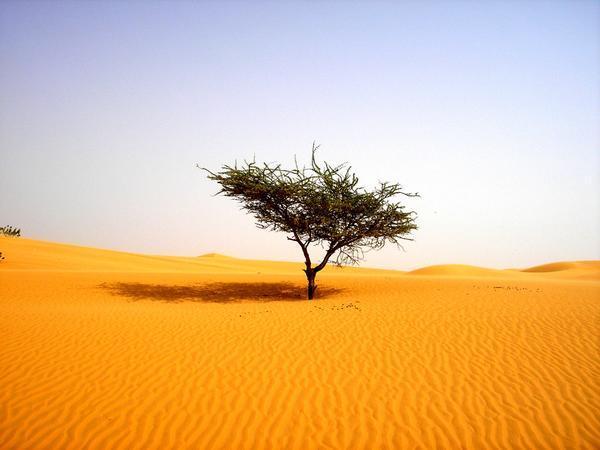
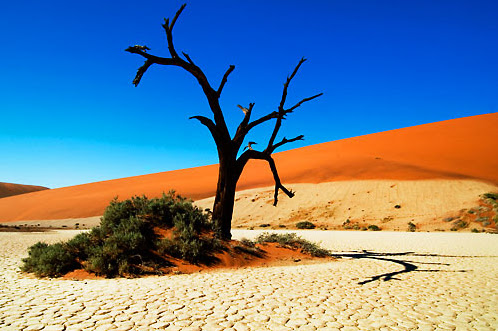
I love the orange in these photos. The last one is particularly striking. Orange seems like such a fake, unnatural color, it really implies that nothing is growing anywhere out there.


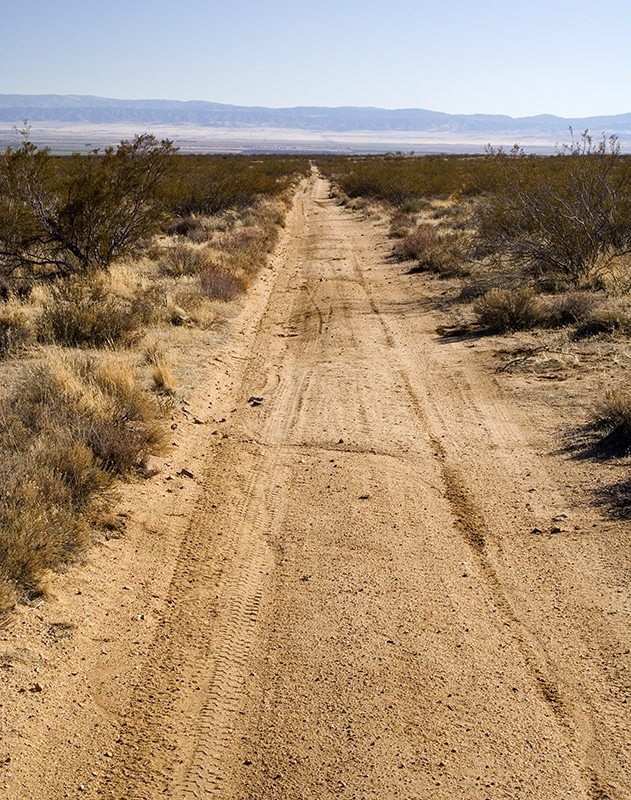
These also have great colors that remind me of the themes of the play, but for quite the opposite reason. They're just completely lifeless, dull grays and browns. I'd like to figure out how to incorporate some "happy medium" of these two sets of images- maybe not quite as shocking as the bright organe, but neither quite as dull as these.


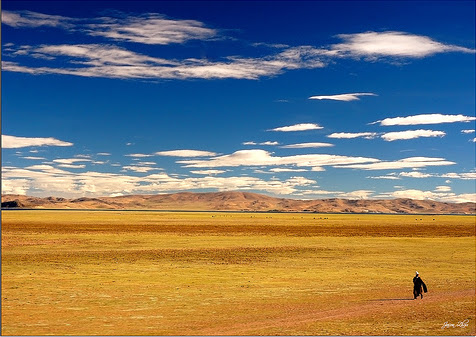
These two pictures stand out for me more because of their scope than their colors or elements. They really zoom out and show the emptiness of the landscape. This is in fact the more important element, so it's going to be important to try to keep the "big picture" in mind.


This particular picture strikes me because it shows loneliness and emptiness in a very different way than the others. Hints of civilization are all over the place, yet it still seems so empty. I think the sky has a lot to do with it, so I'll have to keep that in mind.


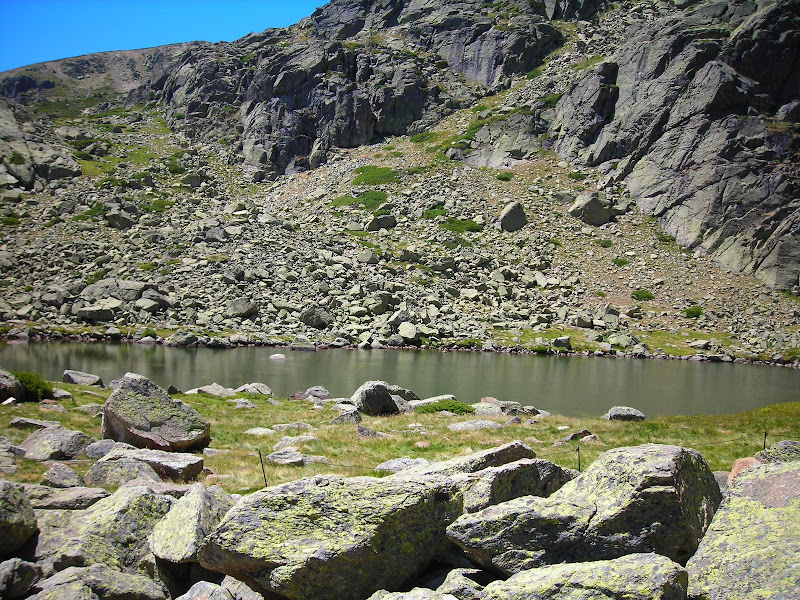
This is a picture of my own that I took. The previous picture above made me think about rocks as the perfect element of nature that demonstrates barrenness and infertility, so I found this one in my collection to have a different view of it.


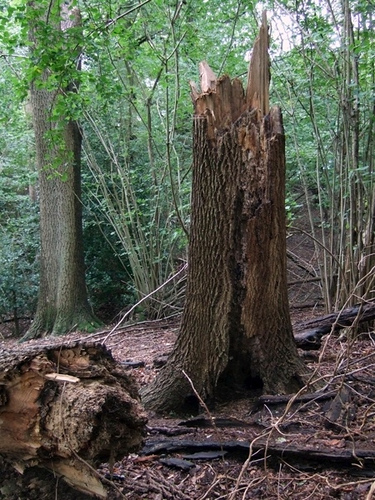
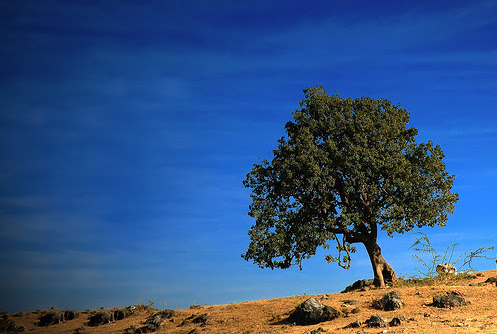
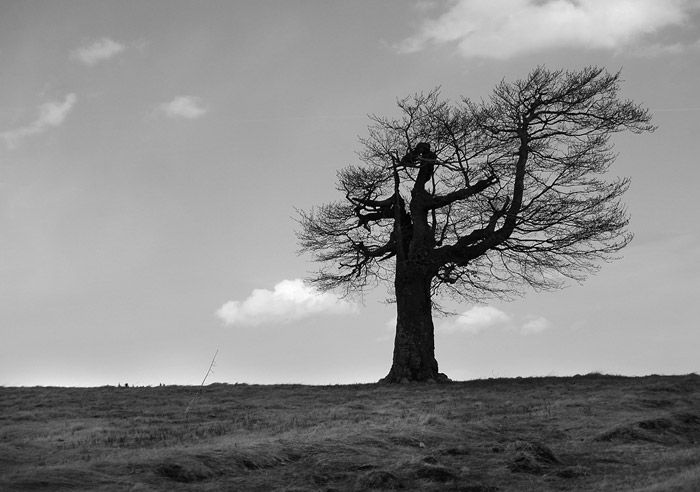
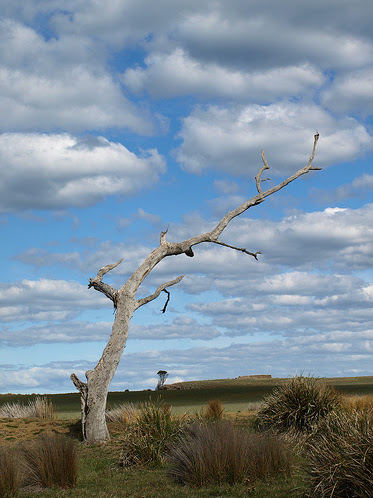
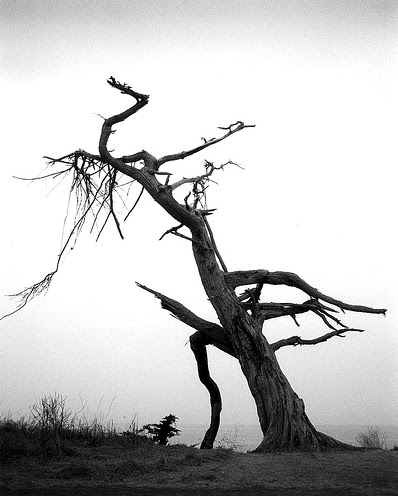
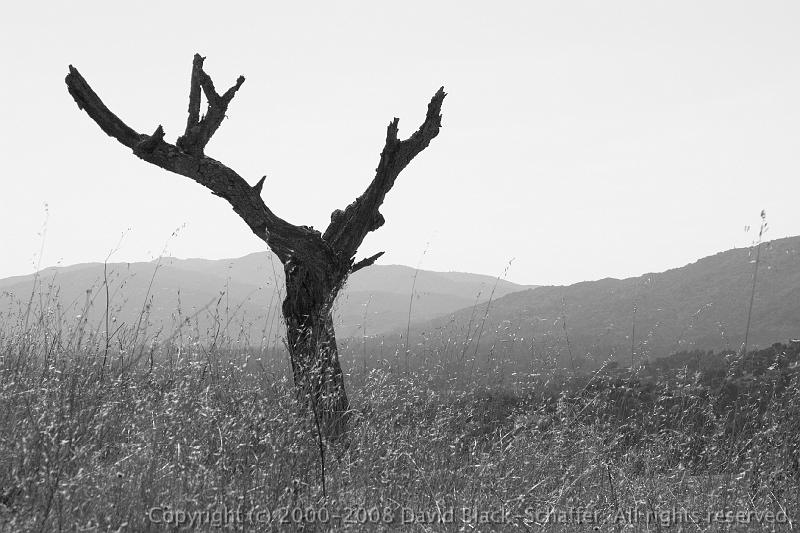
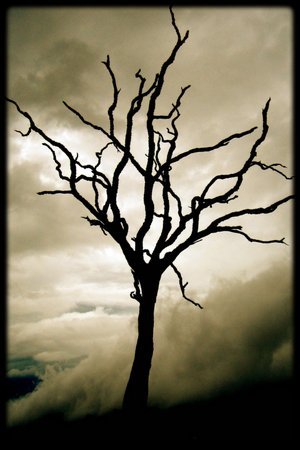
These are just sort of typical, dead, lonely trees. They're not bad, but they're not great. I think I much prefer these:


Monday, February 23, 2009

First Readings of Waiting for Godot

The assignment for tomorrow's class is to read Waiting for Godot twice: once just to get an initial reaction, and then a second time to develop a sound knowledge of the physical requirements of the set. I'll record both of those things here.

Reaction
Apparently, Samuel Beckett is really into creepily isolated and semi-fantastic or ambiguously-fantastic settings. Both Endgame and Waiting for Godot take place in vague locations, and the reader (or viewer) is never quite sure if it even really exists, or if it does, if it exists in this universe or this dimension.

When I read the play, I found it hard to really picture the set. Part of that, I think, was because I was also reading the stage directions. Sometimes I would imagine the actual scenery of the location- a huge, barren wasteland with a single tree. (It's actually almost the exact same mental image I have of the opening scene of Grapes of Wrath.) But then I would read the stage directions and be "taken out" of the scene. When I'd read something like "exit stage left" I'd just picture Little Kresge with one sad looking tree, just right of center. It's hard to imagine what "nothing" looks like when made into a set that can fit onto a predetermined size stage.

The biggest challenge I see in this play is the idea of space. The characters are supposed to run back and forth, away from each other and then back again, see people off in the distance that they can't quite identify, and so on. The set somehow has to give the impression of all of this space. It's not just nothing, it's a whole lot of nothing.

Physical Requirements
Descriptions
The location of the play is described in the stage directions as simply, "A country road. A tree. Evening." (Both acts take place at the same time.) Vladimir describes the location to Pozzo in Act II: "It's indescribable. It's like nothing. There's nothing. There's a tree."

Elements of the set
  • country road: Pozzo and Lucky may or may not be using the road (I don't think it's ever specifically mentioned.)
  • mound: where Estragon sits and takes off his boots
  • bog: the audience
  • ditch: mentioned as where Estragon sleeps, not necessarily onstage.
  • tree: is barren in Act I; suddenly has leaves in Act II; Estragon and Vladimir argue over whether it looks like a bush or a tree, and discuss hanging themselves from one of its branches
  • sun/moon: From the stage directions: "The light suddenly fails. In a moment it is night. The moon rises at the back, mounts in the sky, stands still, shedding a pale light on the scene."
Action of the play
Below is a list of some actions which occur during the play. Some of them might influence the design of the set.
Characters enter and exit from both sides of the stage.
Lucky dances.
The characters fight physically (when Lucky is thinking).
Vladimir and Estragon "scrutinize the sunset."
In Act II, the characters fall and can't get up, and therefore spend a considerable amount of time rolling around on the floor.

Props
A large number of props are used.
Estragon: hat and boots
Vladimir: hat, miscellaneous "rubbish" in his pockets, lots of turnips, 1 carrot, 1 radish
Pozzo: whip, watch, glasses, pipe, matches, vaporizer, and handkerchief
Lucky: hat, rope (which becomes shorter in Act II), heavy bag (claimed by Pozzo to be filled with sand), folding stool, picnic basket (which contains pieces of chicken and a bottle of wine), Pozzo's coat